
Imagine this: You’re a middle school science teacher. Every year, you teach a familiar curriculum, following the same battle-tested lessons with a new group of students. Then, one day, the standards change. Your curriculum no longer meets the requirements, and you need to find a new approach to teaching science. You realize the new standards demand the best for your students: combining collaboration, critical thinking, and hands-on learning experiences to explain scientific principles. But where do you even begin?
This challenge was a reality for most teachers in 2015. The state of Michigan adopted new science education standards modeled after the Next Generation Science Standards (NGSS). While previous standards emphasized memorizing facts and vocabulary, this new approach encouraged students to ask questions, solve problems, and think outside the box.
Thankfully, a group of Michigan Tech researchers saw this dilemma as an opportunity to create a new science curriculum that would meet these standards and provide resources for teachers to effectively implement them.
One of those researchers was Jackie Huntoon, and that solution was Mi-STAR.
Behind the Star
Jackie Huntoon was one of the founders of Mi-STAR. Originally from Los Angeles, California, Huntoon moved to Houghton after earning her PhD and has spent the last 37 years at Michigan Technological University. Before retiring in August 2026, Huntoon served as Division Director for Graduate Education at the National Science Foundation (NSF), following stints at Michigan Tech as Dean of the Graduate School and Senior Vice President for Academic Affairs.
“I felt like if I hadn’t come to Houghton and tried out life in the U.P., I would have always felt like I’d missed an opportunity for an adventure.”
After the new standards were released, Huntoon saw an opportunity to create a new curriculum for middle school students. “At Michigan Tech we’re good at studying problems, but we’re also good at developing solutions,” Huntoon explained. She gathered scientists, engineers, educators, and education researchers to begin developing a new middle school science curriculum and complementary professional learning resources for teachers. The team submitted several grant applications before receiving the opportunity to present their idea to the Herbert H. and Grace A. Dow Foundation. They were rewarded with a $5 million investment from the foundation to support development of this new curriculum.
This funding was used to develop a science curriculum for middle school students, specifically grades 6-8. These grades were intentionally targeted because middle school is often when students take their first standalone science class. These years play a pivotal role in shaping their interests and can heavily influence what they choose to pursue in their future careers. Huntoon and her team wanted to create a curriculum that would do more than just teach students about science. They saw the new science standards as a conduit to get students interested in pursuing STEM-related fields and show them that career opportunities in science, technology, engineering, and mathematics are not only possible, but also exciting and rewarding. Creating something of this magnitude, and getting it into the hands of Michigan teachers, was no small task. With an entirely new set of standards to abide by, there was no existing curriculum to use as a guide.
“There were no models to follow. We built it from scratch,”
Unlike traditional science curricula, Mi-STAR takes a problem-based approach to learning. The lessons encourage students to apply their knowledge and skills to a real-world problem. Each unit focuses on a specific challenge that motivates students to engage with the material. “That means that the learning always has a real-world anchor students come back to. That makes the learning immediately relevant and gives students an answer to ‘Why are we studying this?'” explained Stephanie Tubman, who works in curriculum development and implementation at Mi-STAR.
Scholars Thinking Like Entrepreneurs
While Huntoon and her team had a deep understanding of academics, they had never started a business before. Originally, Mi-STAR operated like any other university-funded project. They relied exclusively on grants, awards, and donations to support their work. However, Huntoon wanted to make this initiative sustainable, rather than something that would fade as the funding ran dry. Former MTU Vice President of Research, David Reed, suggested that Huntoon and her team take part in MTEC’s SmartStart Program. Jackie and her team started taking the classes back in 2017. The program encouraged them to think beyond grant funding and donations to remain viable for years to come. “The basic take-home message, ‘No money = no mission,’ changed the way I look at so many things,” said Huntoon.
SmartStart trained them to narrow their focus and hone in on what needed to be done to drive the initiative forward. Rather than pursuing many ideas and potential pathways for Mi-STAR, Huntoon began considering the return on investment (ROI) of each new opportunity. “We can develop the world’s best curriculum, but we can’t support teachers or make improvements without a revenue stream. When we weigh new opportunities, always at the back of my mind now is, can we eventually turn this into revenue that can allow us to do more good things in the future?”
SmartStart also helped Mi-STAR understand how to appeal to their varying audiences. Huntoon and her team did an amazing job developing strong relationships with teachers who saw the value of the curriculum. However, those educators weren’t the ones making purchasing decisions for their school district. “We had connections to teachers, they loved what we were doing, but they don’t hold the purse strings,” Huntoon explained. Understanding the needs of the school district administrators and how to communicate Mi-STAR’s value to them became one of the most valuable lessons from SmartStart.
Today, Mi-STAR is a Michigan Tech-owned initiative supported through a combination of funding opportunities and revenue-generation with a state-wide community of more than 800 hundred dedicated teachers and teacher leaders. “What stood out most that first summer as a teacher was how the MTU staff valued us and listened to us, and treated us as professionals,” shared Chris Geerer, who works in professional learning with Mi-STAR. Geerer is a former classroom teacher who was involved in the initiative’s early curriculum development. Throughout the company’s journey, the university and MTEC alike have provided invaluable resources and guidance Mi-STAR still uses today.
Beyond Michigan
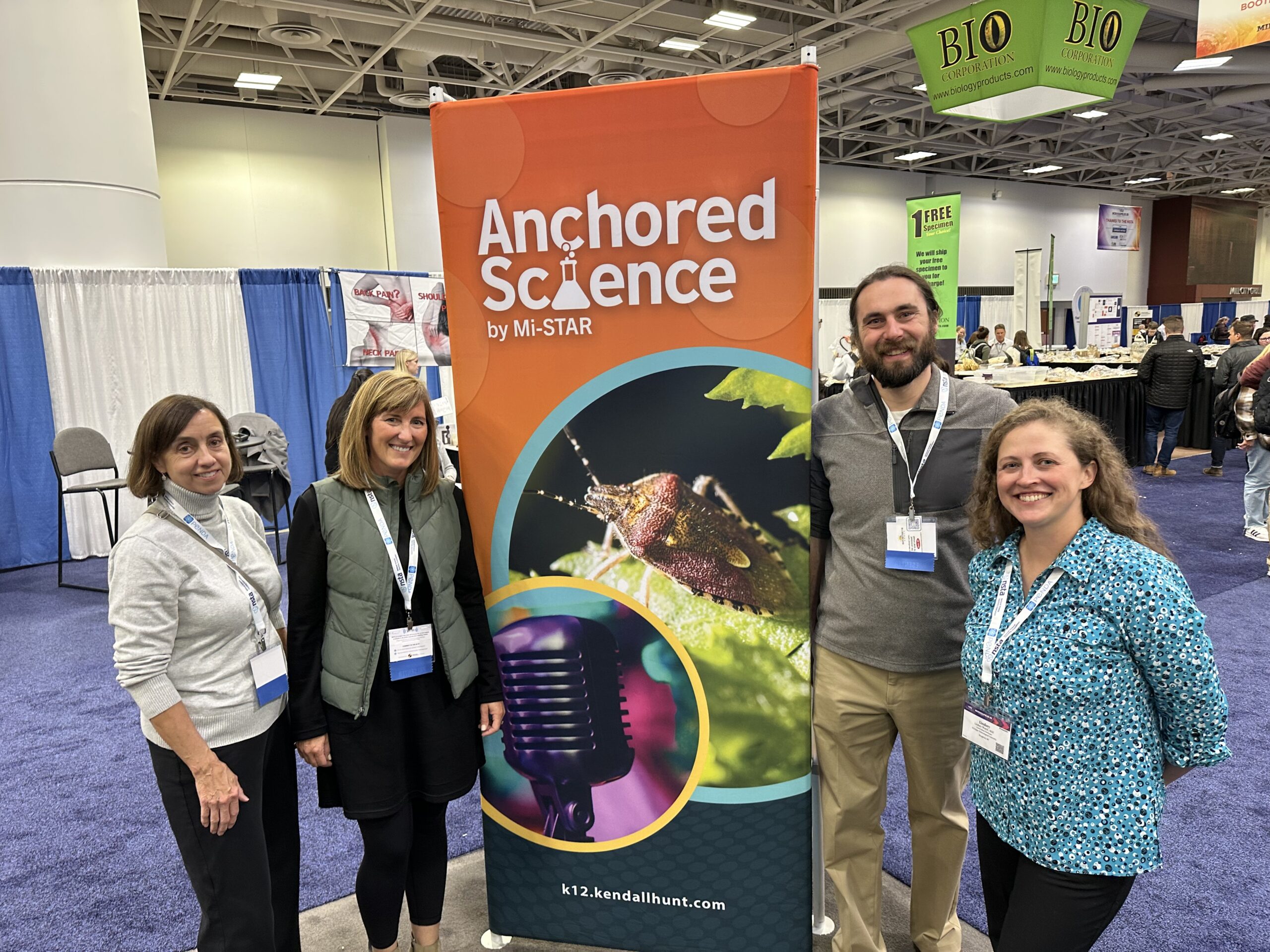
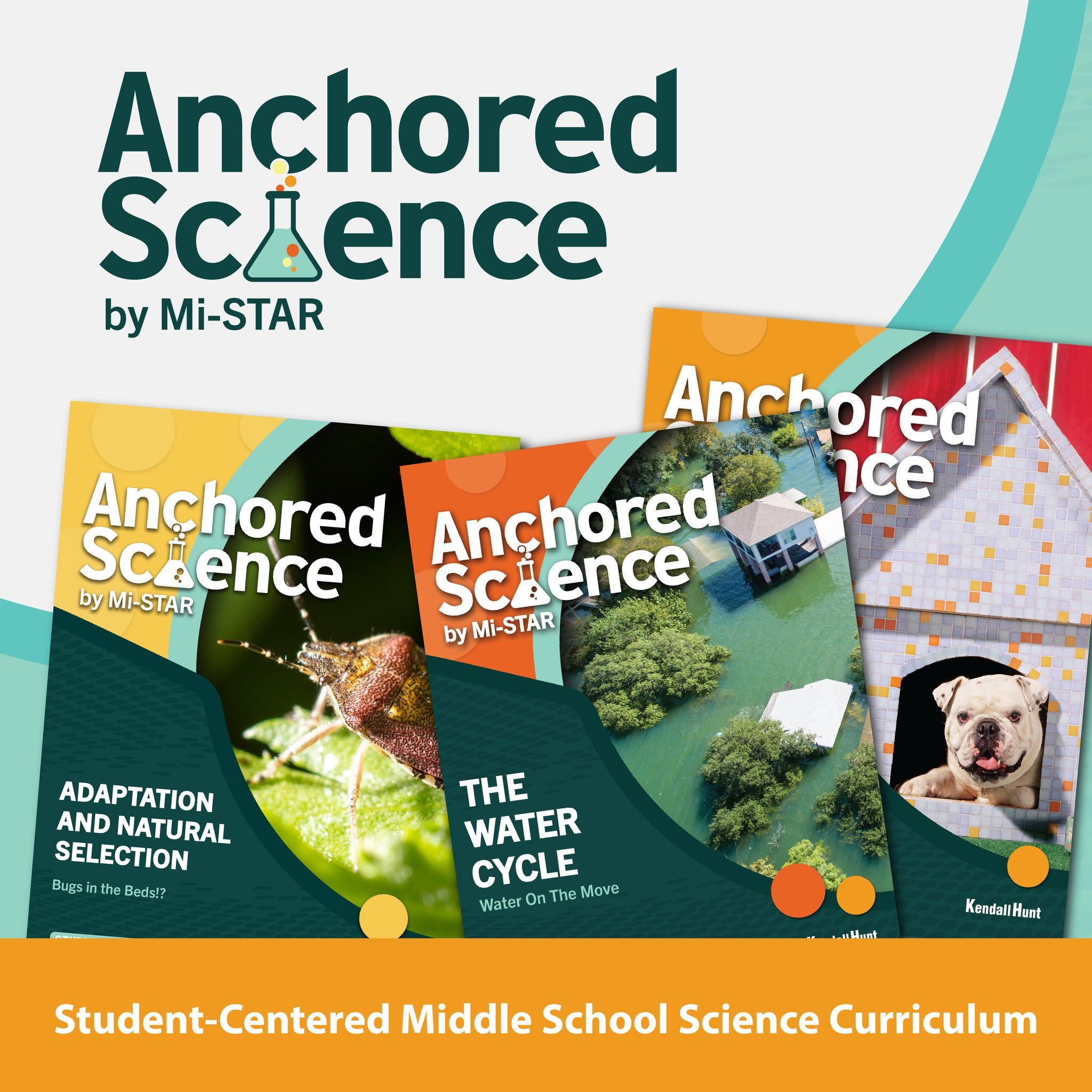
A publisher contacted Huntoon inquiring about publishing notes she had written for a university-level course she taught. While she wasn’t interested in publishing those materials, she did mention Mi-STAR. This caught the publisher’s interest. From there, that email led to a partnership with Kendall Hunt, allowing Mi-STAR to reach even more students, this time on a national scale. As of fall 2026, Mi-STAR’s curriculum is now available under the name Anchored Science by Mi-STAR, offering published student workbooks and teacher guides.
What began as an effort to provide a more hands-on, creative approach to STEM education is now a published educational resource for students across the United States. But Huntoon and her team are far from finished. Mi-STAR is looking to expand its curriculum beyond grades 6-8. They have early-stage plans to develop additional materials for grades 5 and 9.
While Mi-STAR has continued to grow, one thing has stayed the same: the importance of listening to the people who helped make it successful. The lessons learned from MTEC’s SmartStart Program have stayed with Huntoon throughout her career, and even influenced how she advised other colleagues at Michigan Tech.
When asked what advice she’d give to someone considering SmartStart, Huntoon’s response was simply: “Well, I would tell them to do it.”
###
About MTEC SmartZone
MTEC SmartZone is a 501(c)(3) non-profit dedicated to accelerating high-tech business growth in the Western Upper Peninsula. Established in 2003, MTEC is one of 20 statewide SmartZones supported by the Michigan Economic Development Corporation (MEDC). Through mentorship, direct grants, specialized programming, technical support, and other services, MTEC client companies have contributed over 1,110 jobs and $91.8 million in sales and revenue. MTEC has helped these companies realize over $594 million in follow-on funding. For more information, visit our website at mtecsz.com, follow us on LinkedIn and Facebook, or email us at mtec@mtecsz.com.